
Zimbabwe Mining Sector Posts Record $8.5 Billion in Exports
Residents in platinum-producing regions report persistent gaps in water, roads, and schools despite the revenue surge.
By Gabriela Flores ·
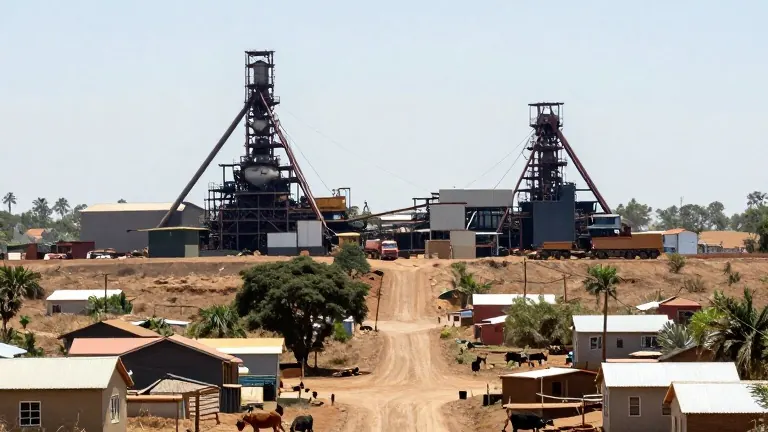
Zimbabwe’s mining industry generated a record $8.5 billion in export earnings in 2025. This figure represents a substantial increase from the $5.9 billion recorded the previous year. John Musekiwa, then-president of the Chamber of Mines of Zimbabwe, attributed the growth to strong output and favorable prices for gold and platinum group metals.
The surge coincided with a broader rally in precious metals. Platinum prices reached an all-time high of $2,923 per ounce on January 26, according to the World Platinum Investment Council. Zimbabwe holds the world’s second largest known deposits of these metals after South Africa. The sector accounts for approximately 75 percent of the country’s exports and 14.5 percent of its gross domestic product.
Despite the national revenue gains, communities near major operations report that local infrastructure has not kept pace. In the Mhondoro-Ngezi district, Zimplats operates mines and processing facilities within the Great Dyke geological formation. Residents in villages such as Turf, Mamina, and Murambwa describe a disconnect between industrial activity and basic services.
Ernest Denhere, headman of Denhere village, called on Zimplats to construct a road linking Kadoma/Kwekwe to Turf and other settlements. He emphasized the need for a lasting legacy. Ward 3 Councillor Emmah Chikwai noted that children from nearby villages travel between 15 and 25 kilometers to reach Musinambi Secondary School. She requested that the mines assist in establishing a satellite school in Makwavarara.
Sakina Lice, a resident of Turf, supports her family by collecting plastic waste for resale. She earns approximately $20 a month from the activity. Lice has 11 children and nine grandchildren. She stated that picking up plastics is her primary means of survival and urged the mine to empower women with projects.
Concerns also surround the Ngwazani River, which lies about 100 meters from a local dump site. Edson Mabure, whose family was relocated due to mining expansion, said sewage from the mine has entered the waterway. Agnes Handidikundiona, a resident, said flooding from the river has prevented some children from attending school. She requested a footbridge to improve access.
Ward 11 Councillor Nhomboka Kurebwa Javangwe said population growth from mine workers has outstripped available facilities. He noted that local councillors have limited direct access to Zimplats officials. In the Shurugwi district, residents of the Unki Platinum Mine area also requested investment in classrooms, water, and roads. Unki’s public relations manager, Evelyn Mawimba, said the mine has invested an average of $1.5 million annually in community development over the past five years. The company built 63 boreholes and supported 32 schools. Unki also pays approximately $130,000 annually in municipal levies and contributes about $850,000 to the Tongogara Rural District Council.
Source: Al Jazeera
More Business · Scam Watch · Report a business · Got a Story?