Gas Hits $4.29 as Trump Pushes $8 Billion Farm Fuel Plan Before Midterms
The national average for regular gasoline has jumped from $2.98 to $4.29 since the Iran conflict began, prompting President Trump to announce new subsidies for agricultural fuel costs ahead of the November 3 election.
By Rachel Wilson ·
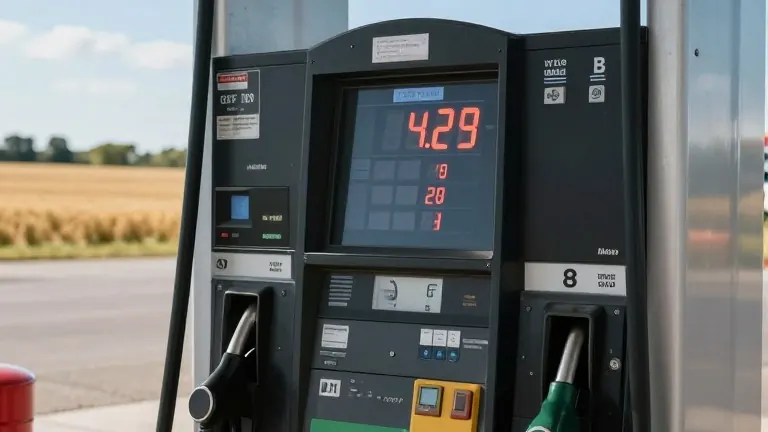
U.S. President Donald Trump announced an $8 billion harvest fuel relief program on Monday to offset record-high diesel costs, a move that lands just days before the midterm elections on November 3. The national average price for a gallon of regular gasoline reached $4.29, a sharp increase from the $2.98 average recorded before the war with Iran began nearly eight months ago. Diesel prices have climbed even higher, hitting a record high last month and currently averaging $6.35 per gallon, up from $3.76 in February.
The surge in energy costs has become a central issue for voters heading into the polls. Cost of living concerns dominate the conversation as households feel the strain of the conflict. Trump has long promoted low gas prices as a key achievement of his second term, yet the current crisis has forced a shift in his messaging. He has repeatedly framed the higher prices as a temporary cost necessary to prevent Iran from obtaining a nuclear weapon, while also blaming former President Joe Biden for the underlying economic instability.
Trump’s statements on energy have evolved significantly since the conflict started. In his February State of the Union address, days before the U.S. and Israel launched attacks on Iran, he touted gas prices below $2.30 in most states. By mid-summer, as oil prices fluctuated, he urged retailers to lower prices, claiming they were "gauging" consumers. In early September, he predicted that oil prices would not drop until after the midterm elections, stating, "I think it’s going to take a little bit longer than the midterm."
More recently, the administration signaled a willingness to negotiate with adversaries to stabilize markets. Trump declared a deal to purchase Russian diesel, a reversal of previous U.S. pressure on Moscow regarding its war with Ukraine. He also asserted that the U.S. maintains "TOTAL CONTROL" of the Strait of Hormuz, despite shipping traffic remaining well below pre-war levels. In a post on Truth Social, he wrote that lower prices for farmers, ranchers, and truckers are his "Greatest Priority."
At a campaign rally in Kansas, Trump pitched the new fuel subsidy package. "When Republicans win, we will pass even more funding for our farmers," he told the crowd, adding that he wanted them to "pretend please that I’m on the ballot." The $8 billion program is designed specifically to help agricultural sectors deal with the 74 percent increase in diesel costs over the past year.
The political stakes are high as the election approaches next week. Republicans are attempting to maintain their control of Congress, but the volatile energy market has complicated their message. Crude oil prices have swung wildly, with Brent crude spiking past $101 per barrel in September before cooling. The administration continues to argue that the U.S. benefits from higher oil prices due to its status as the world's largest producer, a point Trump emphasized at a rally in Georgia this weekend. "We’re making a freaking fortune," he said.
The next scheduled milestone is the November 3 general election, where voters will decide the fate of the House and Senate. The administration expects the new fuel relief measures to help sway undecided voters who are focused on the price at the pump. The current price gap between pre-war and current fuel costs stands at $1.31 per gallon for regular gasoline, a figure that campaign strategists on both sides are watching closely.
Source: ABC News