Math Toy Guide: Hands-On Tools Replace Worksheets
A new buying guide for Wake County families details how specific manipulatives, from 65-piece scale sets to addition board games, build arithmetic skills without the pressure of traditional practice sheets.
By Thomas Bennett ·
Parents in Wake County seeking alternatives to traditional workbooks are turning to hands-on manipulatives to teach basic arithmetic. A new consumer guide outlines specific tools that help children grasp spatial concepts and patterns through physical play rather than written exercises. The approach emphasizes self-paced learning, allowing children to engage with mathematical ideas in a low-stress environment.
The guide identifies three primary categories of educational toys: board games, flashcard sets, and counting activity kits. Board games are noted for introducing critical thinking in a familiar format, while flashcards offer portability and clear direction. Activity sets, which include shapes and counting pieces, are designed for open-ended creativity and are sized for small hands. The report suggests that tactile stimulation is a key factor in retention, as physically adding or removing pieces helps solidify abstract concepts like addition and subtraction.
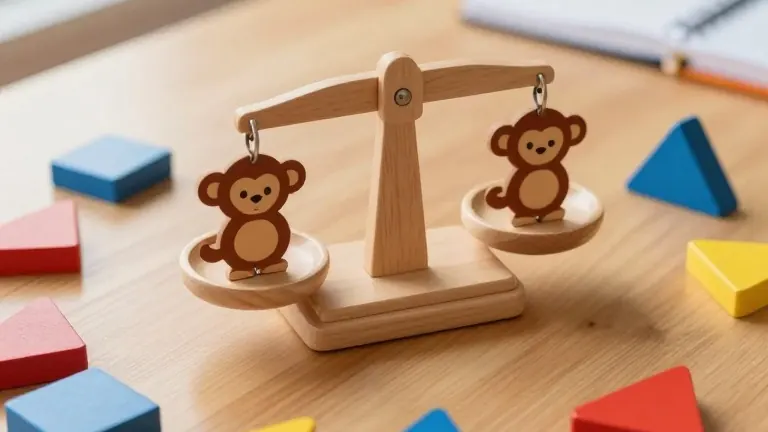
Visual design plays a role in engagement. The guide notes that bright colors and familiar characters, such as smiling faces or monkey motifs, help children connect with the learning material. These elements also support other educational goals, including color recognition and pattern grouping. For classroom use, the guide recommends multi-player board games or flashcard decks to maximize student participation. Alternatively, teachers can set up stations with various toys to allow for rotational learning.
Costs vary significantly by complexity. Simple flashcards and basic board games typically range from $5 to $15. Activity sets with a wider variety of manipulatives cost approximately $30. Premium options from educational manufacturers fall between $35 and $50. The guide advises buyers to check the intended age group or grade level on packaging, though it warns that these labels do not always match a child's actual skill level. Parents are encouraged to review the specific subject areas covered to ensure the toy aligns with their child's needs.
The guide highlights the CozyBomB Monkey Scale Balance Toy as a top choice for its 65-piece set. This kit includes a scale that teaches proportions, units of measure, and spatial relationships. It is recommended for children aged five and up. A secondary recommendation is the edxeducation Math Cubes set, which includes 100 snap-together cubes and an activity guide. While praised for its affordability and design, the small size of the pieces is noted as a potential issue for misplacement. The Learning Resources Sum Swamp Addition & Subtraction Game is also cited for its ability to host up to four players and allow for dice modifications.
Simulation toys, such as cash registers and clocks with movable hands, are described as useful for applying math skills to real-life scenarios. These items allow children to practice calculations in contexts they will encounter outside the classroom. The guide notes that prices listed are current as of publication but may fluctuate. For educators, the recommendation remains to prioritize tools that accommodate multiple users or can be easily rotated among students.
The guide concludes by emphasizing that the effectiveness of these tools depends on how well they match the learner's current abilities. While the visual and tactile elements are designed to keep children engaged, the underlying goal is to make arithmetic feel like play rather than a chore. The specific products listed, including the monkey-themed scale set and the snap-together cubes, are presented as concrete examples of this methodology in action.
Source: The News-Herald